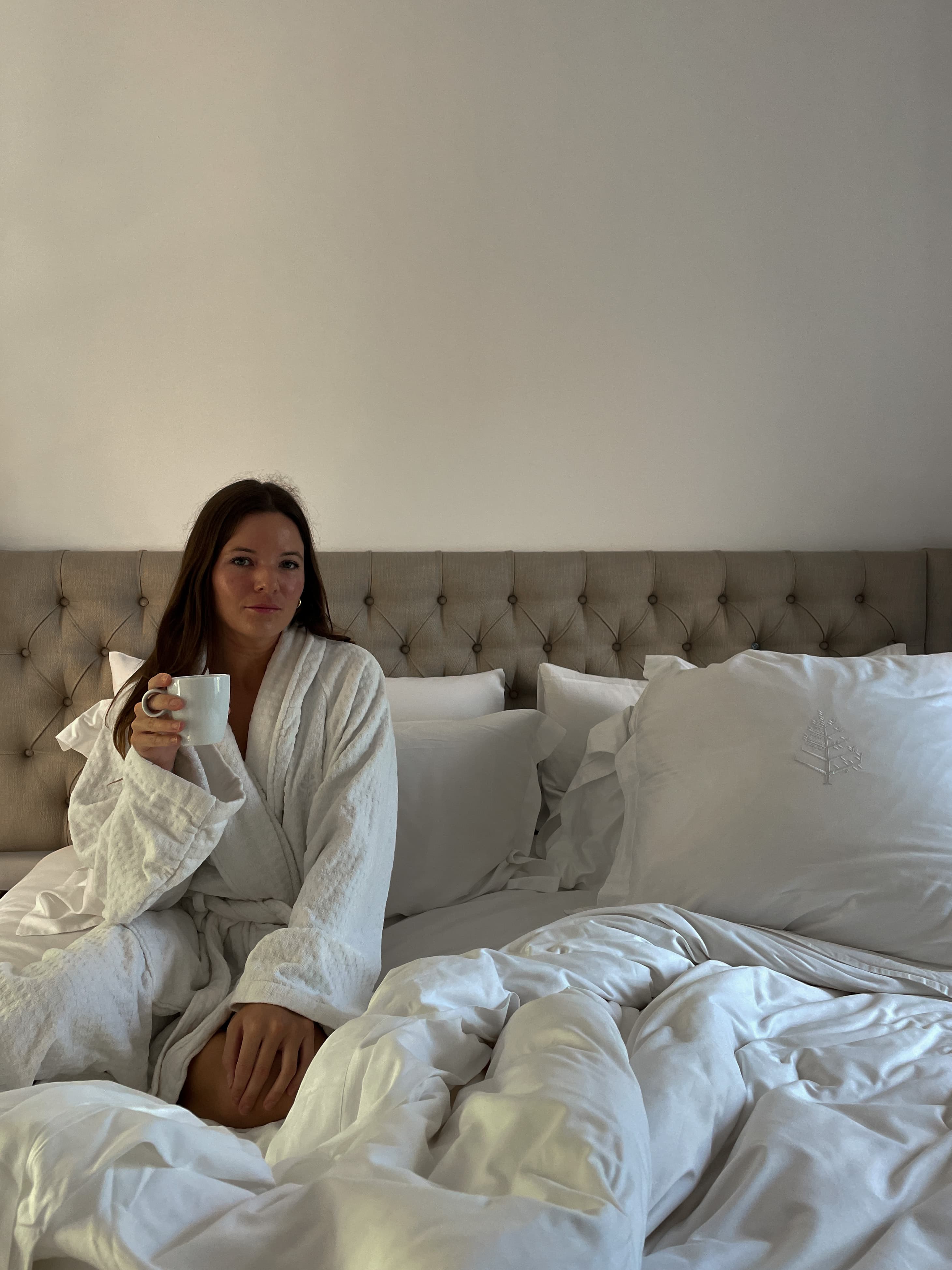
A Retreat Within Bogota: Two Nights at The Four Seasons Casa Medina
Prior to becoming The Four Seasons Casa Medina, the building was nearly demolished. What remains, stained glass songbird windows, stonework salvaged from a 17th-century convent, a spiral wooden staircase, makes the case for preservation louder than any argument ever could.

A building that should not exist
There is a particular quality of light in old buildings that cannot be replicated. It is the light of accumulated time — filtered through glass that has warped slightly over decades, bouncing off plaster walls that have been repainted many times over but retain the undulations of every layer. Four Seasons Casa Medina has it in abundance. The building should, by rights, have been demolished in 1980. A development proposal had been approved. What stopped it was a formal declaration by President Belisario Betancur, who recognized the 1946 building as a Monument of Cultural Interest — one of the few such protections Colombia had extended to modern architecture. The building stood.
It was designed and built by architect Santiago Medina Mejía, who had studied in Paris and returned home with a head full of French classical proportion and, it seems, a collector's instinct for reclaimed material. The columns, the salvaged stonework, the carved wooden doors — much of it was sourced from the Convent of Santo Domingo, a 17th-century building that had been demolished elsewhere in the city. Medina was, in other words, already saving things before the concept had a name. The result is a stunning marriage of eras that no contemporary build could fake.

The signature moment is the staircase, and it is genuinely breathtaking. Looking down from the upper floors, the spiral tightens into a composition almost too deliberate to be accidental: a chandelier suspended through the center, stained glass windows depicting songbirds at each landing, the wrought iron balustrade tracing its curve below. I stood there for longer than was probably polite.
The rooms
No two rooms at Casa Medina are alike — the heritage mandate ensures it. The irregular footprint of the original building gives every room a slightly different character, a different relationship with the light. Mine had the quiet warmth of a private apartment in an old Parisian hôtel particulier: a palette of warm woods, deep neutrals, and soft candlelight tones, with a hush that the rest of the city couldn't reach. The aesthetic is unmistakably colonial-elegant — old-world without ever tipping into costume.


The suite's living room read like a private library — deep leather, dark wood, and the kind of low light that makes you want to stay in. Every surface carried the patina of considered age, and the overall composition was warm rather than stiff. The Grand Premier rooms include a wood-burning fireplace, brought and lit by the staff — exactly the right level of ceremony for Bogotá's cool evenings.
Bogotá nights are cool — the city sits at 2,600 meters — and the combination of the fireplace option, the weighted linen, and the thin mountain air makes for the kind of sleep that is, on its own, worth the plane ticket.
A morning ritual

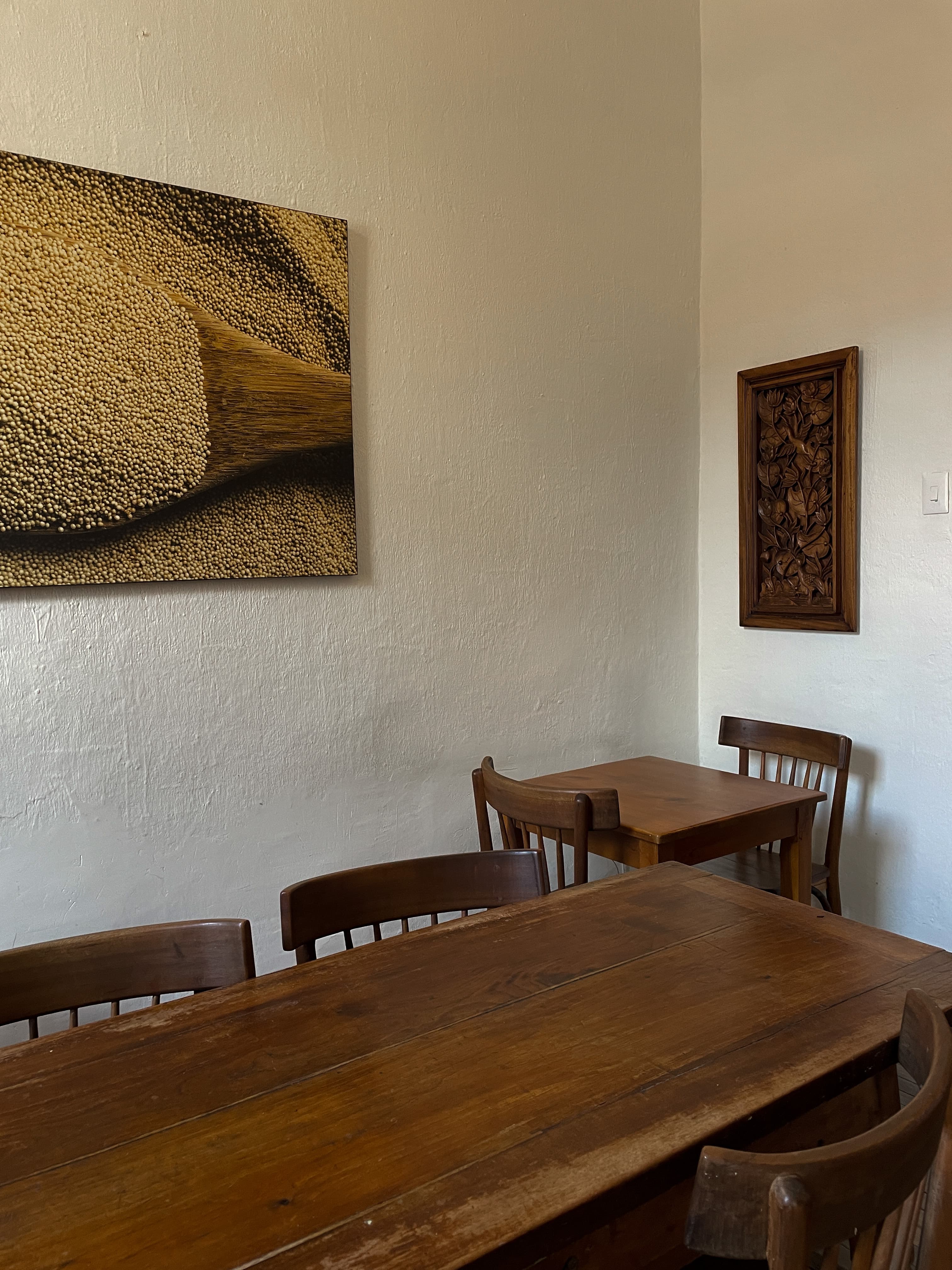
The restaurant is called Castanyoles, and it is Spanish — tapas, raciones, an arroz that arrives in its own pan. But it is breakfast where the room reveals its most stunning bones. The original courtyard has been enclosed under a sweeping glass ceiling, with a vertical garden of living plants covering one entire wall. On the morning I arrived at seven, the space was still quiet, the light coming down through the glass at a low angle. A cheese-filled arepa arrived alongside a glass of maracuyá juice. There was Colombian coffee — dark, not over-roasted, served in a small white pot. The fruit plate included dragonfruit, papaya, and pineapple. I came back both mornings. It is the kind of breakfast that makes you feel the rest of the day can be approached without urgency.
The neighborhood: Zona G
Casa Medina sits in Zona G — the G standing for *gastronomía*, which tells you everything about the district's self-understanding. It is a quiet, residential corridor of serious restaurants and tree-lined streets between the commercial buzz of Zona Rosa to the north and the civic weight of La Candelaria to the south. The streets are low-rise, unhurried, and largely devoid of the tourist infrastructure that accumulates around more famous addresses.
From the hotel, the city opens in several directions. Leonor Espinosa's Leo — consistently among the best restaurants in Latin America — is a short walk. Gastón Acurio's Bogotá outpost Astrid y Gastón is reportedly one block away, though I would advise confirming before walking there in good shoes. For an afternoon of world-class luxury retail, Zona Rosa and the Andino Mall (Louis Vuitton, Dior, Gucci, alongside the Colombian designers worth knowing) are fifteen minutes by taxi. Parque 93, a calmer open-air alternative, has the kind of café-lined blocks that reward slow walking — Silvia Tcherassi has her Bogotá boutique nearby, and Amelia Toro's work, weaving artisanal indigenous textile traditions into contemporary fashion, is worth seeking out.

A half-day in La Candelaria
Bogotá was founded here in 1538. La Candelaria is the original city — narrow streets running steeply between painted plaster facades, political murals, university buildings, and churches that have been standing since the seventeenth century. It is twenty minutes south of Casa Medina by taxi, in a different register entirely.
The itinerary writes itself: Plaza de Bolívar first, for the spatial scale and the political theater of the surrounding buildings — the Capitolio Nacional, the neoclassical cathedral, the Palacio de Justicia. Then the Museo del Oro, which is not to be hurried. The Banco de la República's collection of 34,000 pre-Hispanic gold pieces is extraordinary on its own terms, but the Muisca ceremonial raft — the object that most likely gave rise to the El Dorado legend — stops you in a way that photographs do not prepare you for. Admission is free on Sundays, and on most weekdays costs very little. Fernando Botero's gift to the city, the Museo Botero, is nearby: 123 of his own works alongside Picasso, Monet, Renoir, Dalí, also free. It is the kind of cultural density that makes you recalibrate the standard European city break.
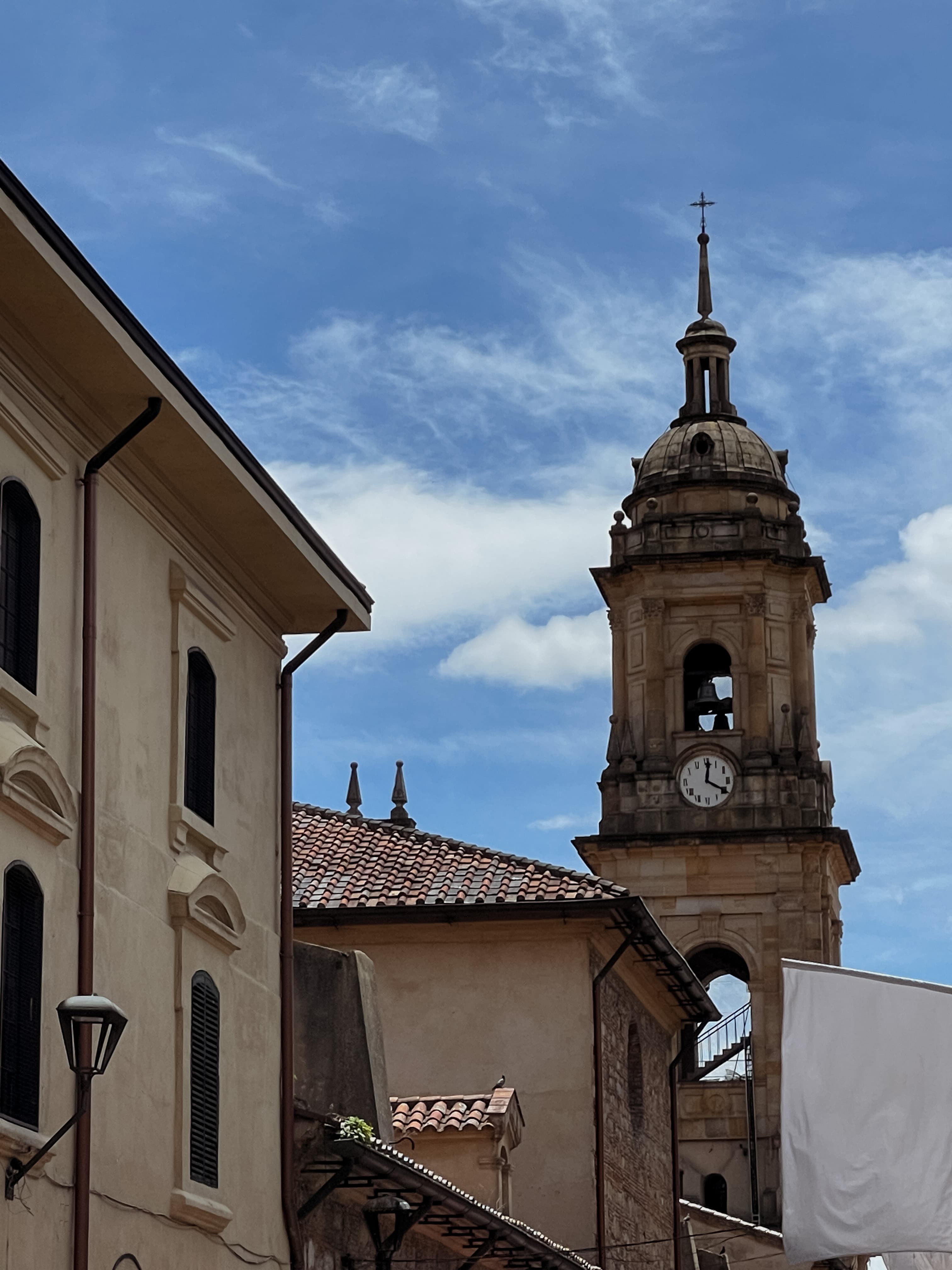
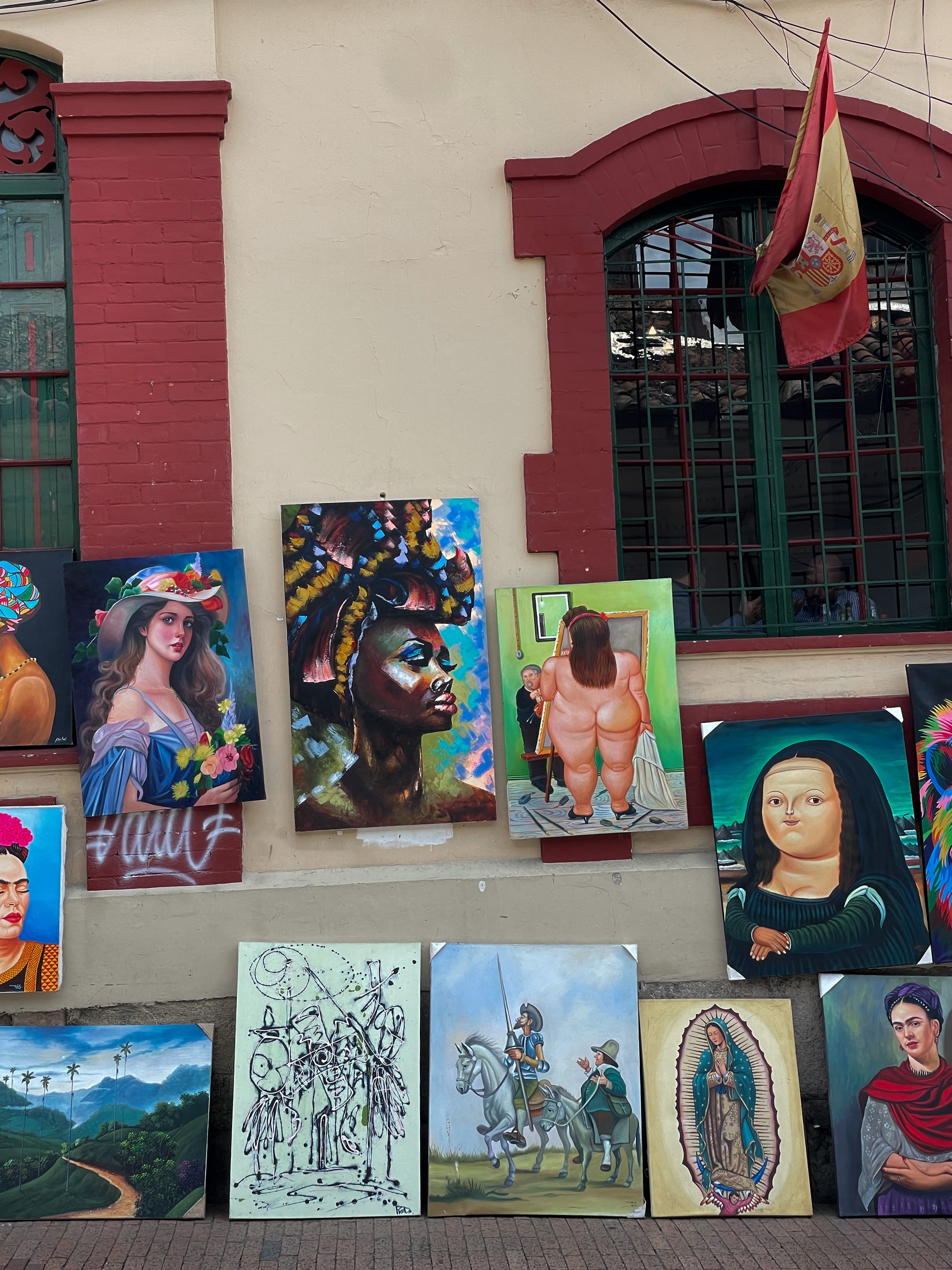
“La Candelaria does not perform for visitors. It simply continues being itself — which is, in the end, the more compelling invitation.”
The details
**Address:** Carrera 7 No. 69A-22, Zona G, Bogotá, Colombia
**Getting there:** Bogotá's El Dorado International Airport is 30–45 minutes from the hotel by taxi in normal traffic; allow 75 minutes in the afternoon rush. The hotel can arrange transfers. Direct flights serve Bogotá from Miami, New York (JFK and EWR), London Heathrow (via Avianca and British Airways), Madrid, and most major Latin American hubs.
**The weather:** Bogotá sits at 2,600 meters and has two "summers" — December–February and June–August — when rain is less frequent. But the city's weather is famously four-seasons-in-one-day. A light layer is always sensible.
**Currency:** Colombian pesos. US dollars and euros are accepted at the hotel and most upscale restaurants; local markets and smaller boutiques prefer pesos. Paying in cash can reduce prices at smaller emerald dealers by 10–15%.
**What to pack:** The altitude means cool evenings even in summer. A cashmere or merino layer and a light waterproof are more useful than anything heavier.
Frequently asked
About this piece
Is Four Seasons Casa Medina worth staying at in Bogotá?
+
Yes — it is one of the few truly distinctive hotels in the city. The 1946 building is a listed national monument, the rooms are all different, and the Zona G location puts you close to some of South America's best restaurants. The glass-roofed restaurant for breakfast alone justifies the choice over a newer property.
What neighbourhood is Four Seasons Casa Medina in?
+
Zona G (gastronomía), a quiet residential district in the Chapinero/Chicó area of Bogotá. It is 15–20 minutes from Zona Rosa and the Andino Mall, and 20–25 minutes from La Candelaria and the historic centre.
What should I do for a day in Bogotá near Casa Medina?
+
A half-day in La Candelaria covers the essential city: Plaza de Bolívar, the Museo del Oro (free on Sundays), and the Museo Botero (always free). The Emerald District on Avenida Jiménez is close by. For shopping and dining, Zona Rosa and Parque 93 are 15 minutes by taxi, with Colombian designers Silvia Tcherassi and Amelia Toro both having boutiques in the area.
Where can I buy emeralds in Bogotá safely?
+
The Emerald Trade Center on Avenida Jiménez near La Candelaria is a reputable indoor market. Ask for RUCOM certification (the government's unified register of mineral traders) with any purchase. Certified boutiques in Zona Rosa and the Andino Mall offer a more curated experience with English-speaking staff. Avoid street vendors and commission-based guides.
What is the food like at Four Seasons Casa Medina?
+
The restaurant Castanyoles serves Spanish cuisine — tapas, raciones, and a reliable arroz. The breakfast, taken in the glass-roofed garden room with a living plant wall, is the highlight: Colombian fruits, house-baked pastries, cheese-filled arepas, and Colombian coffee served properly.
Karen Alexandra
Brand strategist, travel writer, and quiet-luxury advocate with 10+ years navigating the intersection of fashion, hospitality, and culture.